
Study in Denmark
Project-based teaching, strong design and engineering schools, and high graduate employability.
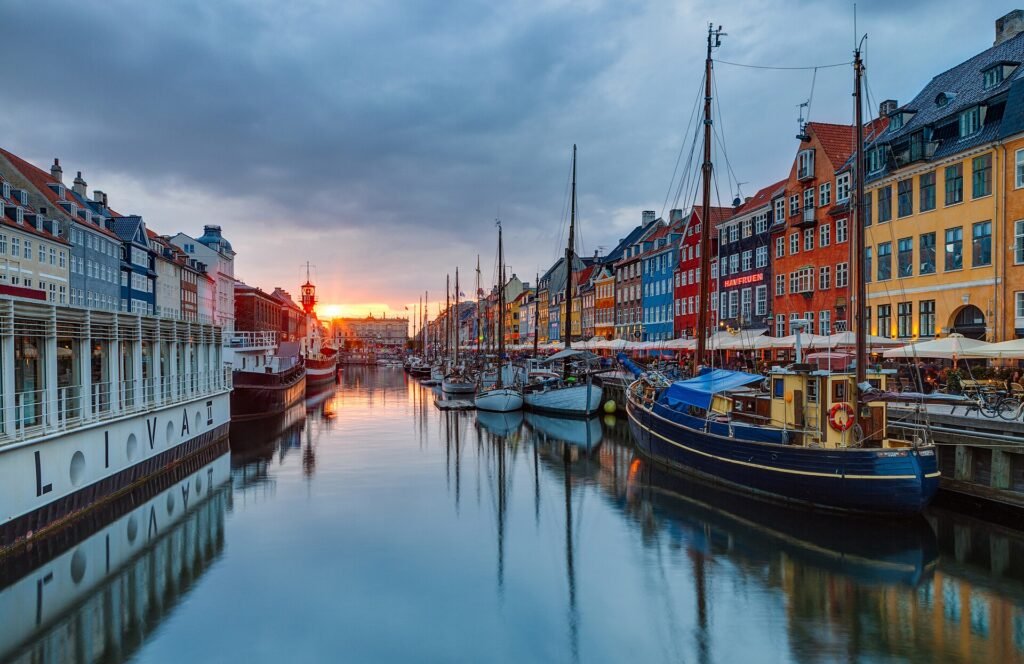
What makes Denmark worth considering
Denmark teaches through group work, real projects and close industry contact rather than lectures and exams alone. It is a strong choice for design, sustainability and engineering, with a large English-taught catalogue.
Project-based learning
Teaching centres on group projects and problem solving, which employers value directly.
Design and architecture
A global reputation in industrial design, architecture and sustainable urban planning.
English everywhere
Among the highest English proficiency in the world; daily life in English is straightforward.
Green technology
A world leader in wind energy and sustainable engineering, with matching degree programmes.
Establishment card
Graduates can apply for a three-year establishment card to live and work in Denmark.
Safe and equal
Consistently ranked among the safest and most equal societies globally.
Key facts
| Tuition | €6,000–€16,000 per year for non-EU students |
|---|---|
| Living cost | Approximately DKK 6,500–9,000 per month |
| Financial proof | Approximately DKK 6,694 per month for the study period |
| Intakes | September (main) and February (limited) |
| Language | English-taught widely available |
| Work while studying | 20 hours per week during term, full-time June to August |
| Post-study stay | 3-year establishment card for graduates |
| Visa type | Danish student residence permit |
Popular courses
- University of Copenhagen
- Technical University of Denmark
- Aarhus University
- Aalborg University
- Copenhagen Business School
- University of Southern Denmark
- Roskilde University
- IT University of Copenhagen
About Denmark
Country facts
Denmark is a Nordic country of about 6 million people, connected to Germany by land and to Sweden by bridge. Danish is the official language and Copenhagen is the capital. The country is known for cycling infrastructure, design and a strong welfare model.
Higher education system
Danish higher education is split between research universities, university colleges offering professional bachelor’s degrees, and business academies delivering shorter vocational qualifications. All degrees follow the Bologna structure with ECTS credits.
Admission requirements
- Relevant bachelor's degree with a strong academic record
- IELTS 6.5 with no band below 6.0, or equivalent
- Motivation letter explaining programme fit
- CV and academic transcripts
- Documented mathematics or subject prerequisites for technical programmes
- Proof of paid tuition and funds
Thinking about Denmark?
Send us your academic record and budget — we will tell you honestly whether Denmark is the right fit, and which universities you are competitive for.